Showing posts with label CLIPH-rate Tax. Show all posts

Thursday, 27 February 2025

How should I rename the CLIPH-rate tax

 A while back I developed and presented my tax proposal. 

Initially I called it the CIPH-rate tax. 

Then I added an L and made it the CLIPH-rate tax. 

That stands for Comprehensive Lifetime Income per hour.

The name is accurate but the invocation of a cliff is a very bad idea. Cliffs are dangerous things that people fall off and die.  

It is also extremely misleading - my proposal if is for a smooth tax-rate curve rather than the familiar thresholds with sharp changes in rate at those income points. 

Tax to reward work

I have been following with interest the enthusiasm among those on the US right for the "No Tax on Overtime" proposal. 

This is driven by a similar ideal to the one that drives the CLIPH-rate tax. 

People who work longer hours should pay lower rates of tax than someone who earns the same amount in less time. 

An overtime tax is a blunt instrument to do that, but it is interesting to see the enthusiasm for it. 

What would be a better name?

So, what snappy name can we come up with for my proposal that makes it sound less technical and avoid invoking the idea of a cliff?

Here are some initial ideas:  

  • Work reward system
  • Laziness tax 

There are downsides to the latter term, because it might end up punishing those unable to work for health reasons, which is certainly not my aim. Those unable to work should be much better off than they are at present. 

But those who are able to work and who do not do so should pay much higher rates of tax. I'm thinking here of those who live off inherited and other unearned wealth, rather than working for a living. 

Does anyone have any alternative name suggestions? 

Sunday, 29 January 2023

Keen and Slemrod Tax Wisdom and my tax proposals


If anyone is doubtful that taxation is an interesting and important topic, I suggest they read the recent book Rebellion, Rascals, and Revenue: Tax Follies and Wisdom Through the Ages by Michael Keen and Joel Slemrod. 

The authors are experienced tax experts, but they explain public finance not through dry mathematical equations but through interesting anecdotes and stories. They present numerous unusual taxes and charges that have been applied over the centuries. For instance, a bridge that people without shoes could cross for free while the shoed (shod?) would pay toll. 

The book covers all the important topics to do with taxation and alternative forms of government funding. It even contains a lot of puns in the section title headings, and I wonder if there were some that I didn't get. 


For those interested in finding out more, perhaps while waiting to get hold of your copy of the book, the authors spoke about some of their favourite examples from the book in a video: 


Tax Wisdom

One feature of the book is that towards the end they review some of what they have taken-away from their years of study and engagement with tax systems throughout the world. They end with their thoughts about where tax might be heading in the future. 

I was pleased (relieved) to see that several of their recommendations and predictions included several things that I have attempted to do with my own tax reform proposal, which I have called the CLIPH-Rate tax, set out in my book Rethinking Taxation. 

I thought I would flag up a few of them here: 

New technology

Keen and Slemrod highlight that the use of big-data could be game changing in uncovering tax avoidance and evasion. I agree. 

This, plus greater integration between taxation and the financial payments system, should create a lot of opportunities to do things differently. João Félix Pinto Nogueira has recently argued that there could be a different model of taxation in the future, and I think this is right.

I believe that the use of real-time calculation (as is now applied in the UK) allows a different way of doing tax. And it needn't just be applied to payments from employers. (In the UK this income tax withholding is called real-time PAYE, but there are similar systems with different names in other countries.) 

All financial transfers could be taxed in real-time based on the recipient's current tax-rate. By current I really do mean current - the tax authority could update their tax rate and inform the financial institution to withhold the correct amount on all transactions. 

Integrating real-time tax calculations into all payments means that there would no longer be any need for payments between taxpayers and the tax authority. Any corrections could be applied at the next payment to that individual. 

Of course, this could include "negative tax" payments to increase someone's payment if they have paid too much tax in the past or if they receive additional support from the government, for instance because they have a very low income or require some extra support due to their personal circumstances (disability for instance).  

Integrate the tax and earnings subsidy systems

This leads onto the next suggestion. Running a real-time system with negative tax rates for low-earners, means that the tax system can be integrated with the benefit system, and used to make payments to recipients. 

A potential problem with this is that support systems tend to need to react swiftly in order to ensure that people in difficulty (for instance who have lost their income) can survive. 

However, I think that using technology and providing a Guaranteed Work Programme (which I think should be offered alongside my proposal), it should be possible to ensure that everyone has continued access to an income. Some special benefits could continue separately, while others would be rolled into my proposed single-tax system, and payments could be triggered regularly if needed. 

Extend the tax period beyond a year 

Keen and Slemrod highlight that 365 days is a rather arbitrary amount of time for taxation calculations. Given that it is the time it takes for the Earth to go around the sun, reflects agricultural seasons, and is  the basis of calendars, 365 days is more sensible than a 250 or 450 day tax year. 

Nevertheless, any given year may not be reflective of the taxpayer's overall situation. As Vickrey and others noted long ago, a longer period would be more appropriate. Indeed, where the tax system is progressive, as I believe it should be, this becomes all the more important. Large payments would then be averaged over many years, rather than included within a single tax year. 

I have therefore proposed, a little like Vickrey, that we should apply a lifetime average tax calculation. This has many advantages, but requires a different way of calculating taxes. 

This allows more progressive tax rates, because these rates would be applied across many years of life. As well as being fairer to those who have fluctuating incomes, and more accurate, this means that people would have no incentive to artificially arrange their payments to occur on one date rather than another in order to fall into a particular "tax year." 

Tax economic rents very highly

One worry about taxation is that it will discourage productive behaviour, but this is the case for some taxes more than others. 

Economic rents occur where the owner of something (their land, spare money, their skills/talents or whatever) gets a higher return from employing it than they would require in order to put it to that use. 

Taxes on economic rents are an ideal tax in this regard because they do not impact on economic behaviour. A landlord will rent out their premise to the highest bidder, whether they get 100% of that amount or 50%. Perhaps at a certain point they would decide it is not worthwhile to rent out their premise and leave it unoccupied, but that would mean that they wouldn't be getting any return on their ownership.    

They are also an ideal tax because they tend to be progressive - it is almost by definition the economically fortunate who have the opportunity to generate economic rents. The less fortunate don't have anything on which to generate rents. 

In practice, it is hard to know what rents are ex ante (before the fact). So a pure rent tax is something that exists in theory and not in practice.

However, I believe that my Hourly Lifetime Averaging system would achieve tax rents well by proxy. This is because:

  • It taxes all income, earned and unearned in a very progressive way 
  • It reduces the tax rate for those who provide their time into the economy through working (or get some credit for not being able to do so)

Tax leisure 

To put it differently, the system I propose taxes leisure. 

This relates to another piece of tax wisdom in the book. Actually, in the book the suggestion is to tax complements to leisure. Taxing the things that people would like to do if they weren't working would make working relatively more appealing. 

I go one step further and just tax the leisure directly. As I note above, the hourly averaging system rewards people who work more hours with a lower tax rate (at least up to a maximum point). 

So someone who has received a lot of income without doing much work (a wealthy heir for instance), would face a very high tax rate (at least until they have worked a lot of hours). Meanwhile, someone who works for a low wage would have a low--possibly negative--tax rate. 

Both have an incentive to work, and the heir can be taxed at much higher rate than under any other system, and the low-paid worker will be able to get a more generous income supplement that won't be as harmful to the economy.  

If someone retires earlier, or works part-time rather than full-time, they would face a higher tax rate on their unearned income. There is nothing wrong with working less, of course. There is more to life than working. However, the wealthy and talented can afford to work less while the poor cannot. Hourly averaging would incentivise everyone to work longer. 

It also retains the incentive to work in higher productivity ways too, since people will always benefit from having a higher income as well. It takes account of hours at work and income, rather than simply income alone. 

Final Thoughts

I don't know what Keen and Slemrod would make of the CLIPH-rate tax. I can imagine they would consider it too idealistic to introduce such a major change, since piecemeal reforms are always easier. They might also argue that it would be hard to administer (they have two chapters on tax gathering and the difficulties in collecting accurate information from people who benefit from hiding this). 

However, it was reassuring from my perspective that the conclusions of the book pointed in the same direction as the proposals that I made a few years ago. :-)

Friday, 20 August 2021

Tax technology opportunities

Are new tax technologies something to fear or an opportunity to do things differently?

One of the contentions in my book Rethinking Taxation (2014), repeated in several blog posts around the time, was that IT advances could change taxation in the same way that it changed other aspects of our lives.

We are now starting to see these developments happening. Real time taxation has been introduced in the UK and an article in today’s Financial Times explains how HMRC is increasingly making use of big data.

This can make tax easier for taxpayers and make it easier for HMRC to crack down on fraud. 


New taxation, new economy

My argument has always been that this opens up the possibility of making the whole economic system much fairer. 

We can calculate everyone’s tax-rate in a more personalized manner without the bureaucratic challenges this would have made this impossible in the past. 

Technology will make it possible to apply a much more thorough tax base, taking much better account of the gains that each person gets from society. 

Put together, these reforms would tax the economically fortunate much more and provide direct support to the less fortunate, skewing the benefits economy back towards working people. 

This can be achieved without the discouragement to work that some people accuse tax-and-redistribute programmes of. 

You can find out more about my proposals for a different way of working out who should get what in society by reading my book Rethinking Taxation, reading some blogs I wrote around the time, or watching some videos I made.

Should we be concerned about the developments?

Legitimate concerns remain about the digital divide and an overpowering state. My view is that these IT developments are going to continue anyway, so we have to hold the state to account and make sure that technology is used to make things better for the citizens.

My proposals should help in this regard by building direct distribution to individuals into the system, not leaving resources directly under the control of politicians or bureaucrats.

We should be concerned, but this just means we have to uphold our duties as citizens to keep ourselves informed and to hold our government(s) to account. We have to demand that the system supports those who aren’t digital natives, that the state does not adopt arbitrary powers, and that the system is making society fairer not less fair.

Taxation for the future

Governments might not be as innovative with technology as the private sector, but we voters can demand that they use the technology available in ways that improve our lives and society.

New taxation technology creates the opportunity to have a fairer economy, if only we demand it.

Saturday, 27 April 2019

Preface for a book I might never write


Preface for a book I might never write: Arguing for the CLIPH-rate tax

Lately I’ve been teaching or planning courses about distributive justice and I’ve mapped out a book I’d love to write if I had the time. It's probably about third on my list of projects though I sometimes mentally change the order of priority.

In fact, I wouldn't be starting from scratch. As well as having taught some of the theories, I could use a couple of pieces I’ve published, and I have written some blogs on the topic too. However, I thought it might be nice to note down the idea here, just as no doubt countless authors have written a preface but never completed the actual book.

The basic idea is to write a three-part (or even volume!) work presenting the argument(s) for my CLIPH-rate tax system from three different theories of justice; Egalitarianism, Consequentialism and desert theory.

Egalitarianism

The egalitarian argument is the easiest one to reproduce as I’ve already written a couple of pieces about this, in an edited collection and in my article “Arguing for hourly averaging.” Resource egalitarianism is the theory of distributive justice I find most compelling, and so this has been my primary concern up until now.

However, not everyone is convinced by egalitarianism and I think that it is possible to make strong arguments for the CLIPH-rate tax from two other theories.

Consequentialism and prioritarianism

Consequentialists about distributive justice believe that the economy should be designed to bring about the best total consequences. The good consequences could be subjective welfare, preference satisfaction, freedoms or some mixture of goods. Consequentialism is a totalising theory; bring about the most good. It therefore doesn’t matter how the goods and bads of society are distributed. Someone might be very badly off both absolutely and relatively under a consequentialist system and they would have no grounds for complaint (except by rejecting consequentialism). For many people, this is enough to reject consequentialism; everyone is just a means to bring about the best total consequences.

In fact, consequentialism does not have to ignore distributive matters entirely. Prioritarianism is a consequentialist theory which gives priority to those who are worse-off when undertaking the consequentialist calculation. The weighting towards the worse-off could vary; with greater emphasis on maximising the total amount of good or with greater priority given to those who have less. Prioritarianism seems to make consequentialism a lot more acceptable, though it doesn’t fully resolve all concerns about it.

How can you argue for the CLIPH-rate tax along consequentialist or prioritarian lines? I’ve made some points in previous blogs and in my book about the ways that an economy with the CLIPH-rate tax at its heart would combine incentives to work, save and invest with a great deal of redistribution to assist those on low incomes. Consequentialists, and particularly prioritarians, would want to ensure that there isn’t an impoverished class of workers at “the bottom” of society. Raising the standard of those who are badly off should bring about better total (let alone prioritised) consequences if we accept that nearly everyone gets declining marginal utility from resources. A poor person will get more utility (or whatever other good you specify) from a £10 gift than a rich person would. A successful economy should therefore focuses on making the worse off as well as possible, where this can be done without damaging overall economic productivity too much.

I would like to do more to show that the CLIPH-rate tax can both help to enlarge the pie while ensuring that everyone gets a decent slice. Hour credits are a key part of the tax calculation, and the only thing that someone can do (by choice) to get more hour credits is to undertake more work. The incentive to work is therefore built into the system. Meanwhile the tax calculation should generate as much taxation from unearned income as possible, representing the ideal form of taxation.

This is because the CLIPH-rate tax should do a good job of taxing not just unearned income but, relatedly, all forms of economic rent. Economic rents accrue to someone when they get more than they need in order to make the economic transaction in question. So if a landlord is considering renting a room and would accept £100 for it, but can get £200 due to high demand, then fully half of the rental income they get is economic rent. If this landlord has a tax rate of 50% they would still rent out their room, but instead of their getting the economic rent, it would go to the government. This revenue can be used to assist the less fortunate members of society, increasing their happiness.
That is a summary of the theory anyway, and I’d like to have more to back up my claims. It would be great to work with economists to help make the case.

Desert theories

I also think that a very strong case can be made for the CLIPH-rate tax from the perspective of desert theory. In a CLIPH-rate tax economy people get more income if they either get more hour credits (more hours worked) or have a higher income. Income made from working will therefore generate much more of a reward than unearned income, something which chimes well with desert theory.
Desert theories aren’t particularly popular with political philosophers, though they seem to be more popular with the general public, who often talk about particular people getting more or less than they deserve. A dodgy banker, crook or tabloid “benefit/welfare queen” could be said to have much more than they deserve. On the other hand, people might claim that nurses, kindly and charitable soul, or other hard-working person get less than they should.

Philosophers have delineated a few different bases for these desert claims. One is that some are more productive than others and should be rewarded accordingly. This is the productive contribution desert base associated with David Miller, Jonathan Riley and Gregory Mankiw.

A second desert base holds that people who do more burdensome jobs should get more than others. This is the compensation for burdensomeness desert base associated with Julian Lamont.  According to this theory, the person who does dangerous or unpleasant work deserves more than others who have less burdensome jobs. Someone working very hard in the cold on a North-sea oil rig with a high risk of death deserves much more than someone who works in a comfortable office.

The third desert base has features from the two above and attempts to get around the problems they have. This is that people who put in more effort should get more than others. This view is associated with George Sher, Wojciech Sadurski and Heather Milne. There are issues with all three desert bases though they all have some intuitive appeal. One is the extent they link to what people earn on the labour market.

I believe there is strong case to be made that the CLIPH-rate tax does a very good job of tracking these desert bases. Under a CLIPH-rate tax system people will get more if they get more hour credits (work longer hours) or if they have a higher income, and particularly if they do both these by working longer hours for higher pay. This seems to track all the desert bases above, since market pay rates reward productivity, burdensomeness and effort, and the hourly element also represents a productive contribution, the burden of giving up one’s time and an effort. Meanwhile, people who receive mostly unearned income from gifts or economic rents will be taxed very highly.

Other theories

I don’t think that there is much traction in arguing for the CLIPH-rate tax from libertarianism, though perhaps it might work from a few of the less common versions of left-libertarianism. Nevertheless, it would be a stretch and I don’t find libertarianism compelling anyway so I can live without trying to make that argument.

Sufficientarianism is another theory that is plausible. While I’m sure it’s possible to make an argument from sufficientarianism I’m not sure whether it is worth attempting it. After all, there are lots of forms of sufficientarianism and many people advocate a pluralist theory anyway (sufficientarianism + some other theory). Plus I don’t see why the CLIPH-rate tax particularly does any better at getting people above thresholds except perhaps for the consequentialist/prioritarian reasons set out above. Let me know if you disagree and think I should write about this.

Prospects and next steps

What are the prospects for ever writing this book? We’ll see. I might be able to do it fairly quickly if I could devote a chunk of time to it, but other things always seem more pressing. Perhaps I can start with a few journal articles and see if anything develops from there. Maybe this is as far as it will get? If so, its nice to have a record at least.

And if anyone has any suggestions or wants to collaborate do drop me an email.

Friday, 21 December 2018

What does it mean to be left-wing?

I’ve noticed a lot of name-calling on the social medias lately, with words like ‘neoliberal’ and ‘centrist’ being hurled at bemused people who consider themselves progressive left-wingers.

This has caused some to decry that they don’t know what neoliberal means, since they know they aren’t one but are being called one anyway. Queue false incredulity from ‘true believers’ on the left.

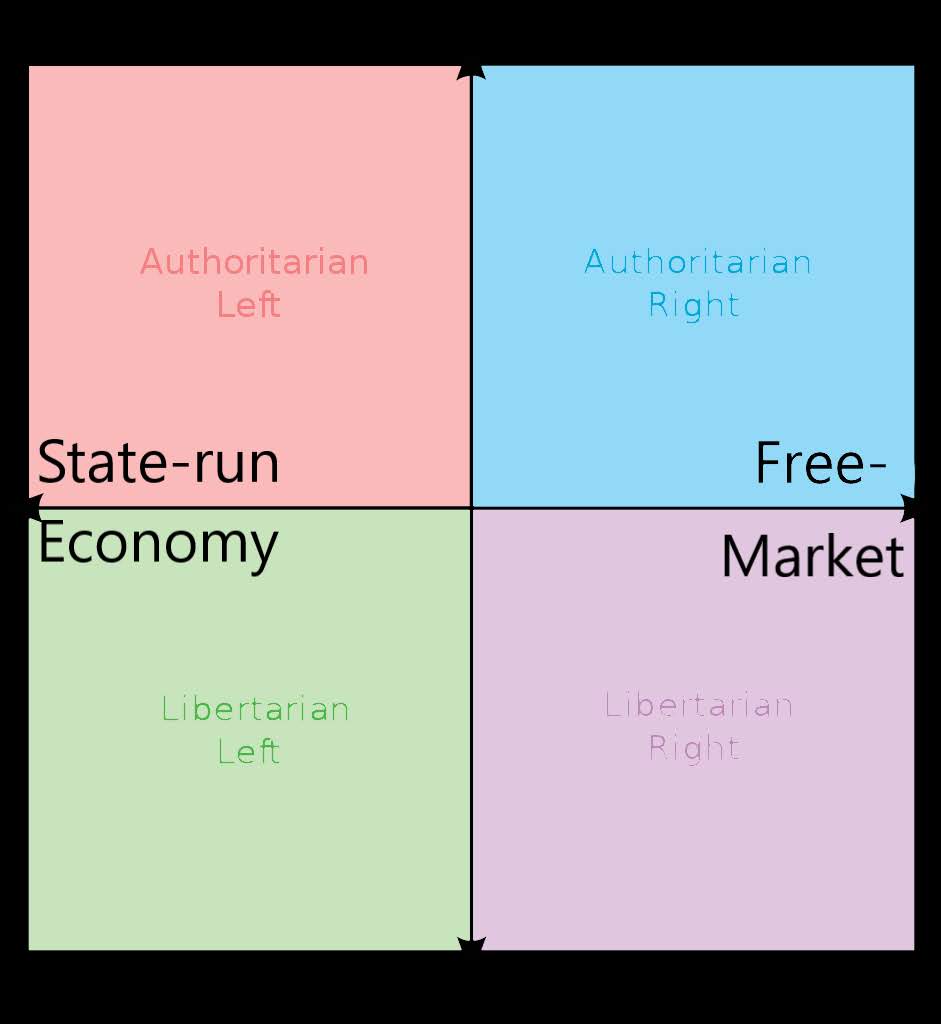
The simple fact is that the loss of faith in state planning by many on the left has led many away from the traditional left. This creates problems when viewing through the familiar political compass.

Traditional political compass

 
According to the traditional compass, above, left-wingers are split into libertarian (anarchists) and authoritarian (socialists). But what does it mean to be left-wing?

One answer is that left-wingers want government control of the economy so that it is run for the benefit of the people or the workers. On this view the political spectrum runs from free-market to government-control.


 The problem with this is that it leaves no room for left-wingers who don’t believe that state-run industry is a good idea, or that it is simply wrong as the state should not exist.

Another answer is that left-wingers want governments to redistribute resources from the economically successful to the less successful. This is less radical in one respect—it doesn’t require the overthrow of capitalism and this isn’t its aim. It requires tough regulation of firms to ensure that they act in the public interest, including price regulation if there are natural monopolies. More distinctly, it requires large-scale redistribution from the more economically successful to the less.


 But if left and right are understood in the ‘old’ way then on this compass there is no place for the distinction between those who would want state control of all industry, those who seek the abolition of private property and those such as myself who advocate a maximally redistributive form of capitalism. Personally, I argue for extreme interference in people’s post-tax income, but not for state control of industries or the removal of all state apparatus.

The kind of position I am referring to was called the ‘third-way’ in the 90s, but is more correctly termed liberal egalitarianism. Liberal egalitarians support whatever economic system works best for the worst-off and want to ensure that everyone has political and personal freedoms. 

The 'third way' was castigated after the failure of the Clinton and Blair governments to that much redistribution. As a side, note, I think they did more than credited, it was nowhere near what many supporters of a ‘third-way’ would want. Critics would point out that this is inevitable since the position acquiesces in a pro-market ideology, while defenders would point out these movements were either unambitious or hamstrung by the political climate.

When compasses fail


Something is wrong with a spectrum or compass if two very different political positions come out as being the same. Or if someone would label themselves in one position but others would place them somewhere completely different.

Both of the above compasses (compii?) fail to reflect the variety of left-wing thought. The simple fact is that the left splits into represent different dimensions – statist/central-planning, reformist/redistributive, and anarchist/utopian.

Does authoritarian-libertarian axis do the job?


Most people will be thinking that I’m missing the importance of the other axis, which adequately allows us to take account of the old-new division. We could ascribe authoritarian as state-control and libertarian as less state control over the economy. This is plausible, and it is probably how many people see that axis. But I don’t think this solves the problem.

After all, this means that the bottom left section contains radically different political views in the same positions. Traditional left-wing anarchist/libertarian thought would appear here as they are against state interference. However, so would supporters of redistributive capitalism, even though these are totally different systems.

The other (authoritarianism) axis is also of course multiply-ambiguous too.

It refers to the level of state interference in people’s lives, but it isn’t necessarily the case that more interference in one realm implies greater interference in another (though libertarians would no doubt claim this). This axis could instead be considered the distinction between social conservativism and libertarianism.

There could be a theocratic state which was very intrusive regarding people’s personal relations, but quite laissez-faire when it came to economic interventions. On the other hand there could be a state which was very libertarian about people’s lifestyle choices but very interventionist as far as private property ownership was concerned.

So, we could ignore the social-conservative dimension and focus on economic interference alone. But then the highly redistributive liberal comes out.

Solutions?


So, should we come up with a hologrammatic cube?

Or an even-more multi-dimensional representation of political space (using sounds or something)?

I don’t know.

But I do know that the left is, as ever, split between various factions with incompatible views while the (perhaps less numerous) right is broadly in agreement on the issue of (relatively or selectively) free markets.

What I don’t appreciate is when people mis-represent the left-wing redistributive liberals such as myself as having a view with which we vehemently disagree. Left-wingers who agree with us on the badness of free-market capitalism label us as ‘neoliberal’ supporters of free-market capitalism.  Right-wingers who agree with us about the badness of state-run economies or the abolition of private property label us as socialists or communists. But we support private property and freedom of enterprise.

Perhaps the only solution is to acknowledge that redistributive capitalism is a valid position and engage with it properly rather than in name-calling. People don’t just hold this position solely as a result of cynical electoral calculation and triangulation (though that be the case for some politicians). Liberal egalitarianism is an attractive political philosophy and can plausibly be considered to offer the best life prospects for working people.


Saturday, 6 October 2018

Free time advocated by the UK Green Party!

It was very heartening to read this weekend that a major political party here in the UK is taking the issue of free time seriously!

Political philosophers and economic researchers have recently been emphasising how this issue has been much overlooked. Bob Goodin's Discretionary Time and Julie Rose's Free time are good examples. In my book Rethinking Taxation I propose a taxation system that takes account of the amount of free time people have.

The Green Proposal is that the state should aim to ensure that people have more free time year-on-year, which I'm not sure about. If people really want to work then that is their choice. However, my concern is that a lot of people have to work very long hours just to get by, not because they really love working in their jobs.

What is needed is an economic system that works for those who work long hours for low wages and something like my proposal would do so.

Measuring the amount of free time that people have, and linking this to their incomes is the first step to taking this issue seriously and I hope the Green proposal gets this point across to a wider audience.

Monday, 8 January 2018

One rule for the rich...

A recent Washington Post piece by Elizabeth Breunig raises a lot of interesting points and is worth reading.
 
She highlights that in the US (as in the UK) there are constant moves to ensure that those receiving ever shrinking welfare payments are in fact working (or actively seeking work). This is sometimes referred to as 'workfare' 

Breunig points out that most of the non-working poor are elderly, children, or care-givers, all of whom seem to have some reason for not earning more in market employment.

What is particularly interesting about this piece is comparison between the treatment of the poor and rich non-workers.

Everyday libertarianism for the idle rich vs. workfare for the undeserving poor

This comparison might strike some as odd - the poor in question are receiving assistance from society via government spending while the idle rich in question aren't. They receive their money from dividends etc.

The author gives examples of policies that benefit investors and capital-holders, which could be considered subsidies for the idle rich. The point is that these subsidies do not come with a work-requirement as do workfare programmes

I think its possible to go further than this. Even if there weren’t such subsidies it would still be morally acceptable to insist that the idle rich work, even if their income comes from a “private” rather than a “public” source.

This is because the idea that there is a difference between the two is based upon a mistake, labelled everyday libertarianism by philosophers Liam Murphy and Thomas Nagel in their excellent book The Myth of Ownership.

This is the idea that people are led to consider their gross income to be ‘theirs’ and that the tax system takes some of it from them. If you are a libertarian, then you might believe this to be the case. However, since libertarianism isn’t a very attractive political philosophy and since most people aren’t in fact libertarians it is an unfortunate but common mistake to make.  

It is more appropriate to consider the property distribution system holistically, and consider each owner (individual, corporation, charity or government) as the temporary holder of their property. There are strong reasons to let the owner have power of the property while they own it, of course, and I don’t draw the conclusion that the government should be able to seize property unless there is an exceptional circumstance (such as a national emergency, where the property is required for infrastructure development or where the property in question is illegal). I don’t go as far as more radical leftists who would then say that the above means that any private property can be seized by the government at any time.

The point is that when property is transferred from one owner to another it is an opportunity for society to consider whether to (in rare situations) block or (more commonly) tax the transaction. It may appear as if the transaction is just between the two parties involved, but in fact the whole of society is involved. Firstly, society supports the system in which the property and the transaction exists. Secondly, the value of the property exists because of the rest of society.

Investors aren’t just sitting on their property, they are sending it out into the world and getting more back. This is captured by my Comprehensive-Acquired-income tax-base. A self-sufficient farmer who tends their own land and gains from it wouldn’t have to pay tax on their gains. But no-one gets rich from being a self-sufficient farmer who does not engage economically with anyone else.

The idle rich person is then a recipient of social wealth in just the same way as the welfare/benefit recipient.

Why do we care whether people work?

There are lots of possible reasons why we might want to ensure that people work rather than receive money while being idle.

·       Social Consequences: If someone who could work doesn’t do so then this is a missed opportunity for society. Society could have got the benefit of this labour but misses out.

·       Paternalistic consequentialist: This is the idea that it is in people’s interest to work (whether they realise or not). This is because people who are idle will get into unhealthy habits, become slothful, lose purpose and so on.

·       Contributions are important: It is important for people (where able) to contribute to society, and people should only receive social wealth to the extent that they do contribute to society. Interestingly, desert-based (or meritocratic) theories of justice would be against all unearned wealth such as gifts and inheritances since these are unearned.

What is interesting is that these three justifications apply to the wealthy just as much as the poor.

An alternative justification is that people should do whatever they are required to do by the correct theory of justice. Some of those theories will require workfare, and they may or may not require wealthy individuals to work too. My preferred theory would require both. This is the correct way to think about it, and I encourage people to engage with such theories.

However, what about those who want to support workfare but not force the idle rich to work before they can receive unearned income?

To be consistent, anyone relying on any of the three arguments listed above also will have to apply this to wealthy individuals who choose not to work.

What is a contribution?

In the article, Breunig makes the point that carers can contribute to society without receiving market income. Furthermore, many clearly socially useful activities aren’t well-rewarded in the market (such as most minimum wage work), while some activities that aren’t as clearly socially useful are well-remunerated. This is because remuneration follows from supply as well as demand.

On the other hand, someone who inherits a fortune and lives off the returns from this obtains a market income without contributing. It would be possible to insist that only those who work should be able to receive unearned income, or that lifetime unearned income should be linked to the amount of work someone has performed.

Market income is not a perfect indicator of contribution. However, again, I don’t take the hard-left conclusion that market income is meaningless.

Nevertheless, there is often some correlation between market income and social contribution, something I mentioned in my blogs on desert-theories of justice. The point is that we can look at a broad conception of contribution as participation in the labour market or undertaking some socially useful activity such as studying or caring.

Workfare for the rich?

So, do we need to insist on workfare for rich investors as well as the poor?

I think so, on the basis that this would make for a fairer society. My CLIPH-rate tax system would link people’s net income to the hours they have worked (or undertaken some equivalent or having been excused from doing so).

However, those who argue for workfare on more limited grounds, such as the three arguments listed above, should also support workfare for the idle rich on the same grounds. This would presumably mean taxing non-working but able people from gaining unearned income through punitive taxation or by blocking such benefits until the individual has undertaken the requisite about of work.

How else could they avoid the inconsistency?

·       They could stop insisting on workfare and instead support a Universal Basic Income, i.e. to give up on workfare.
·       They could advocate a theory of justice which justifies workfare programmes for the poor but not the rich. This rules-out desert or contribution-based theories. Furthermore, it probably also rules-out consequentialist theories which emphasise economically strong outcomes.


As I mentioned, my proposal is to link net income and work for all those who can work. This applies whether they are wealthy or poor, high-earner or low-earner. 

Wednesday, 13 September 2017

Money for all? The costs and savings of a Universal Basic Income

The idea of giving everyone in society an income is an old one- Thomas Paine suggested it way back when. However, it is being taken increasingly seriously and the Green Party, Labour and now the SNP are supportive or investigating it.

There are several arguments for some form of Universal Basic Income (UBI). Arguments can be made from philosophical principle, such as the argument that a UBI offers a unique and valuable kind of freedom to all members of society (see the work of Phillipe Van Parijs).  However, another argument is that the UBI would be more economically effective, partly because of the bureaucratic savings involved.

A third argument is that a UBI is necessary because artificial intelligence and robots will cause mass unemployment. I would support a basic income if this occurs but it clearly isn’t going to happen any time soon. I will therefore concentrate on the first two arguments above.

Both those arguments are challenged if a UBI is costlier than its supporters assume. The reason is clear with regards to the second argument mentioned above, but also applies to the real freedom argument. This is because the level of sustainable UBI will in fact be lower than expected and therefore the real freedom offered would in fact be less valuable than expected.

We can split the arguments against a UBI into arguments about fiscal cost and arguments about its likely economic effects. Of course, in practice the two are largely interlinked and I will argue that UBI supporters are probably too optimistic about the latter which makes their cost predictions easier. In approaching this issue I’m happy to ignore the set-up costs of a UBI as these would be a one-off cost, but the likely ongoing costs both fiscal and wider do concern me, as I will outline below.

One problem with assessing detailed basic income proposals is the variety. Each advocate can present different changes to other taxes and benefits to pay for a UBI at their preferred level. Essentially you can tack on whatever tax and benefit changes you want to your basic income scheme to make a total package of changes that will broadly cover the cost of the scheme. However, there will be losers from such changes and often the complexity in the benefit system are there because it is hard to get money to the people who really need it without also giving it to people who don’t. John Kay makes this point well in his blog on the subject, making the point that there will be losers and they are likely to be very sympathetic cases and therefore effective campaigners.

Kay’s blog covers quite effectively the costs and savings of the likely benefit changes, where he charitably assumed that a Green Party proposal was correctly costed so I will focus on the administrative savings argument and the wider economic impacts of a UBI.

So how much would a UBI save or cost?

Free money? On administrative savings

There is one way in which a UBI would generate funds that could benefit everyone without costing anything, which is that the low administrative costs compared to a contingent (non-universal) benefits system. Of course, a lot of the spending is on wages for state workers, who would need to do other work instead (or live on the UBI) but I will take it as read that this is a straightforward saving.

However, the administrative savings wouldn’t be very significant. A pro-UBI Green party paper estimates these savings to be £8bn per year in the UK. Split between 65 million people this amounts to £123 each per year. Hardly a huge amount to write home about.

The Green Party proposal, for example, says that they use £8bn figure rather than the £10bn allegedly quoted in a Citizens Income Trust report to account for this difference. I have failed to find the document quoted and the closest I’ve found to the one described claims a £5bn net saving. Five billion (which I believe is a very optimistic estimate of the overall cost given that those with certain special needs would still need to be assessed) shared out would amount to £77 per person per year.

I believe extra payments for those with special needs would need to remain in place and the administrative costs are undoubtedly concentrated on these. I therefore worry that the more optimistic assumptions about cost savings include taking away such payments which could have a catastrophic effect on people with, for example, expensive disabilities.

A UBI supporter could reply that I’m being unfair by assuming that all members of society would obtain the UBI. This is because other progressive tax changes would mean that only those with low incomes would be net beneficiaries—a much smaller number. So, if we assume the UBI is only shared between 9 million people (roughly the amount of people out of work in the UK at present) then it would rise to £556 per person. If shared between those currently receiving jobseekers allowance this would be an increase of £10 per person per week compared to what they receive at present. This assumes, of course, that the number of those receiving the benefit doesn’t rise substantially (see below on wider economic changes).

Other changes in public finances
The costs of the scheme therefore are mostly found by changing other benefits and/or raising taxes rather than making administrative savings. There will be losers and this is what needs to be assessed.

These wider changes can be done independently of a UBI of course. Another trick in Basic Income papers is the claim that tax revenues would rise due to the basic income. But this means that the state is giving money to people and then taking it back straight away. What matters of course is the net change to people’s income.

An OECD report models an affordable UBI that would be too low to assist in reducing poverty in OECD countries. UBI supporter Karl Widerquist (in his “Back of the Envelope Calculations”) challenges their methodology by insisting that it is wrong to require budget-neutrality when assessing UBI systems. A pro-Negative Income Tax paper by Wiederspan, Rhodes and Shaefer makes a similar argument. These papers rightly point out that net distributive outcomes are what really matter, and anti-UBI writers should take this approach just as UBI supporters should. However, the “back of the envelope” assumptions from these authors would have significant wider economic ramifications as I will outline in more detail below.

Furthermore, as a UBI is less targeted than the programmes it would replace, those with specific requirements (such as disabilities or lots of children) are very likely to lose out, unless the UBI is set so high that it would have very substantial costs. Basically, you can set the UBI low and it won’t cost too much or have economic disincentives or you can set it high and achieve all social goals but with really very concerning fiscal and economic costs.

Wider economic changes

Things get interesting not in the immediate change to public finances but in the wider economic changes a UBI would produce. Put simply, there would be major upheaval as some businesses and industries find they are no longer viable, others become much more successful and further industries boom.

Using current household income data and benefit payment levels, as Widerquist does, to calculate the costs of a UBI is therefore questionable, particularly where the UBI is assumed to be very high and therefore to have a significant impact on people’s employment choices.

Will people leave work?
The most obvious change is that some people who are working may decide to stop and others who are looking for work may cease to do so. Most assessments of the fiscal cost of UBI assume people will still earn the same amounts of income after the system is introduced, which probably wouldn’t be the case.

Supporters of Basic Income trial schemes seize on studies that show that people do not stop working or engage in socially useful activities such as caring instead. However, I would add some caveats to these findings. Firstly, small-scale trials may not replicate an entire society switching to the system, in particular because of the extra attention researchers give to those involved. This attention may improve their personal outcomes in a way that receiving money and no attention may not. Furthermore, if everyone in society is eligible for the income then this may erode the general work-ethic in a way that would not apply in a UBI trial.

Of course, it is all speculation how people would behave differently with a UBI. However, it is part of the point of the system that some people would leave full-time work to do other things. UBI supporters often suggest that people would be able to do useful things such as learning, caring and building up businesses. All of which would certainly be valuable and I would be happy to support assistance to enable them to do so.

However, some people are what I have elsewhere termed leisure-lovers because they wish to maximise their time spent on low-cost activities and therefore seek to work the lowest amount of time to cover their needs. These people are the ones that will make a UBI more expensive overall as they would spend less time (if any) in paid employment under a UBI.

I can think of many examples of people who would count as leisure lovers:
·        Door-to-door proselytisers for their religion
·        Avid readers
·        Amateur historians
·        Rock musicians
·        Artists
·        Fitness freaks
·        Poets
·        Sport enthusiasts
·        Novelists
·        People who like to travel
·        Computer game-obsessives
·        Some may wish to set up a church of their preferred kind (someone seems to have done this in their garden shed near where I live!)

I’m quite sure a non-trivial number of people would follow interests such as these if a UBI made this possible. The rest of society may consider the benefits of these activities to be minimal. If someone sets up a new church or spends their time writing bad poetry will this really help society?

A further and related point is that some people may well choose to retire earlier if they are not forced to wait until a certain age to receive their ‘pension.’  The state pension age is often the trigger for retirement as it then becomes affordable to stop working, but this may cease to apply.

On a personal note, I think I count as a leisure-lover and would therefore benefit from the UBI scheme I am arguing against. I prefer to spend my time reading, researching, teaching and writing than working a 9-5 job. I hope that my doing these things is socially useful, but I imagine many people would consider that it would be more useful if I was engaged in full-time paid work instead.

The existence of such leisure-lovers is a problem for UBI supporters because they threaten to increase the costs of the scheme without providing the alleged benefits. The direct costs would be that this would mean that more money would be getting paid out to recipients and less money would be collected in taxes. This could quickly blow a hole in the calculations. However, this would also have wider economic effects, as I will also discuss below.

Tax Credits
Most proposals for a UBI involve it replacing tax credits (also known as employment subsidies and called the Earned Income Tax Credit in the USA). Some on the left are very opposed to tax credits because they see it as subsidising employer profit rather than employee wages. However, there is every reason to believe that these are good for employment rates and workers.

The extent to which the employee and employer benefit from the credit will vary from case to case. In some cases, the employee will get all the benefit, while in others the employer will capture the lion share. However, note that the latter cases could include some whole industries that would not be competitive in wealthier countries without tax credits.

Some on the right would say it would be better for such industries to die off while others on the left would claim that such industries should be protected or subsidised to keep them going even though it is cheaper to produce such items abroad. However, in the first case the upheaval would be much more damaging and possibly costly than the continuation of earnings subsidies. In the latter case, if the state is saving an industry by paying it money or forcing consumers to pay more for its goods then how is this any better than providing tax credits?

This section has moved away from the UBI, but the point is that the UBI will tend to help industries that find it easier to recruit, whereas tax credits help industries that struggle to compete internationally and help keep consumer prices down. I imagine there would be more computer-game start-ups but fewer manufacturing plants. Maybe this is a good thing – computer-games are a profitable and growing industry. However, it seems like a more diversified economy is a much safer bet than a more ethereal one.

Price rises
One advantage of a UBI is that it will improve the worker bargaining position, which is a good thing. I would support doing that through the provision of a job guarantee scheme (see below) which would also have a similar effect.

However, a consequence of improving worker bargaining is that it will likely lead to price rises for consumers. In addition, as highlighted regarding tax credits, it may also undermine some exporting industries as well.

A UBI would also (in some cases intentionally) lead some people to choose to leave the labour market. If more people do so this would reduce the pool of workers available and again put pressure on wage rises.

The correspondingly higher wages can also result in a reduction in employment in some sectors and/or price rises. Unemployment might not be considered a problem given that people will have a guaranteed income, but this will then increase the direct and indirect costs of the scheme. Of course, it could be that all those laid off will become entrepreneurs, but what if they don’t? What if they give up on paid work entirely and there is a smaller pool of workers available as a result?

Now, there would be a compensatory price reduction in some areas. It might become cheaper to acquire items that people enjoy producing; artisanal products might become cheaper and people would quite possibly enjoy their work more. These are good things for those people, but the rest of society will end up paying more for most of their goods and services with a UBI.

If the price of labour, goods and services do rise, as I have suggested they would, then this will also mean that more government expenditure will be spent on goods and services, putting pressure on

Summary of my claims

I have claimed above that a more dynamic assessment of the complex consequences of a UBI would likely show that there would be a lot of additional costs. These would counterbalance the gains—if prices rise then the basic income loses effectiveness and so would either need to be raised or would be less effective at reducing poverty than advertised.

Of course, perhaps a basic income would lead to significant productivity advances and corresponding rises in income. However, if the point is that people are free to earn less than they would otherwise then it seems that overall lower productivity would result.

What matters in the final analysis is the distribution of the benefits and costs of the system. This is hard to work out even ignoring the dynamic economic consequences I have raised above.

It is wrong to assume that a UBI would be a fantastic panacea. The devil would be in the detail and its (difficult to predict) overall economic effect. It would benefit some people, of course, such as those who want to pursue uneconomic or risky dreams and ventures. Mainly, it would benefit those with strong a preference for uneconomic activities—a group we can refer to as leisure lovers (of which I am almost certainly one so I’m arguing against a system from which I would benefit). It would almost certainly help the low-paid, though I would contend that other proposals such as mine would be more effective in this regard.

Alternatives to a basic income

The alternative to a basic income is obviously not to have a basic income (as is the case everywhere at present). But that isn’t to say there aren’t other policy proposals out there which could make a difference to people’s lives.

I would obviously point towards my own novel tax and benefit system, the CLIPH-rate tax. However, other alternatives include the following:
·        A Participation income – proposed by Anthony Atkinson, this is similar to the basic income but dependent upon engaging in approved activities. (My CLIPH-rate tax proposal similarly allows hour credits for participation in a range of activities such as caring and study and not just paid employment.)
·        Tax credits to encourage people into work and to encourage employers to create more jobs (discussed above).
·        A job guarantee scheme which ensures that anyone willing to work can do so and get paid. This is included in my CLIPH-rate tax proposal as people capable of working need to have access to hour credits to receive income without corresponding tax-rises.

All these proposals also have costs and therefore require higher taxes or other public finance savings to pay for them. However, because they seek to encourage people to engage in socially useful activity they would not have as big an impact on the wider economy as a UBI would.


Overall, the UBI isn’t the perfect panacea some of its fervent advocates assume it to be. Some people would lose out from it and society would face an expensive bill if many people take the option to follow their personal interests or retire earlier as a result of the system. 

Tuesday, 5 September 2017

Are Robots and AI going to cause mass unemployment?

Futurists, Utopians and Basic Income advocates seem keen to emphasise that we are entering a new economic era that will change everything. This is the age of the robots, where machines and machine intelligence will make most, if not all, human labour redundant.

This sounds great in many ways, but I think we shouldn’t get too far ahead of ourselves, for several reasons.
Will this guy be taking the jobs of table-tennis players?

Firstly this clearly is not in the process of happening at present – the UK has morepeople in employment than ever before (over 32 million – including 75.1% of those 16-65). Productivity is not increasing rapidly, which might imply major technological advances.

Secondly, there are clearly plenty of useful things for humans to do and so we don’t need to entertain this argument until robot slaves really are taking care of all our needs and our (reasonable) desires.

Revolution or gradual evolution?

I don’t doubt that technological chance will continue to alter workplaces and lead some jobs to change radically and even disappear entirely. We see this all the time: docker jobs lost to containerisation, telegrapher jobs lost to radio operators, radio operators lost to digital communication. The Luddites rioted against weaving machines. Change can be fast-paced and while it generally benefits society overall in the long-run by making us all richer, there are sometimes lost skills and in some cases, great hardships for affected individuals and communities.

I can certainly envisage computer technology, driven increasingly by machine learning, taking over more and more tasks currently done by humans. However, I don’t expect that all jobs will be taken overnight, or even for the foreseeable future.

A recent McKinsey report draws the conclusion that only about 5% can be completely automated in the short-to-medium term. Most workplaces will of course be revolutionised if the promised developments really do occur, with jobs changing focus along the way. However, this does not imply there will be mass unemployment.

Put simply, there are plenty of useful things that humans can do. New jobs spring up all the time, often relating to the new-technology. The idea of someone working in “social media” for example would make no sense to someone fifty years ago. More complicated machines also need more expert engineers to create, monitor and maintain them.

Other jobs can also be done by more workers to better effect. Many tasks that are done on a voluntary-only basis at present could become professions. People could spend more time caring for the disabled, for example, including spending time with them rather than taking care of their basic needs. A favourite example of mine is that class sizes in schools and Universities could be reduced by a half or a quarter by doubling or quadrupling the number of teachers.

Resource limits, supply and demand

A further constraint on the computerisation of everything is that machines require power and materials. If machines become more capable and ubiquitous then it may be that the earth’s resources struggle to keep up and the prices of machine inputs increase. On the other hand, if people start losing their jobs then they will look for work elsewhere.

This process will constantly tip the balance back towards employing humans as they get relatively cheaper while machines get more expensive. There may end up being jobs that could be done by machines that humans can do more cheaply, at least when consumer preferences (for example to interact with a human rather than a machine) are considered.

As mentioned above, there seems to be plenty of demand for labour in the UK and plenty of people who would be keen to come to the UK to work. I don't believe this is a UK phenomenon either--other countries with increasing populations seem to find work for their populace to do.

Is hourly averaging redundant?

Some may suggest that my work-based proposal for fairer taxation and benefit calculation are irrelevant because very soon there will be no work to do. I completely disagree that the change will happen so quickly that it would not be worth seriously considering the proposal.

However, to the extent that revolutionary labour-market change is coming, I would argue that my proposals is the best available way to manage this change in a fair manner.

If we see work as a good the availability of which is gradually being reduced then it would need to be rationed out during the period of reduction. This can be done very easily with hourly averaging by slowly reducing the maximum amount of hour credits that can be claimed per week/month. Those who work longer than the maximum will be taxed at a higher rate for those additional hours, which would then give them an incentive to work fewer hours, allowing others to pick up the slack. This shares out the work without banning people from working longer if it still suits them and their employer (though with the advantage that one or both parties will be paying a higher rate of tax or pay for the privilege).

Conclusion

To answer the question at the outset, I don't think Robots and AI going to cause mass unemployment any time soon. Technological advancements will change the labour market, as will changing tastes and environmental depletion.

However, I want to emphasise two things from this. The first is that we don't need a Universal Basic Income on this basis any time soon. Furthermore, instead of being a problem for my hourly averaging proposal, technological developments make it more attractive to manage such changes in a fair manner.