Showing posts with label equality. Show all posts

Saturday, 27 April 2019

Preface for a book I might never write


Preface for a book I might never write: Arguing for the CLIPH-rate tax

Lately I’ve been teaching or planning courses about distributive justice and I’ve mapped out a book I’d love to write if I had the time. It's probably about third on my list of projects though I sometimes mentally change the order of priority.

In fact, I wouldn't be starting from scratch. As well as having taught some of the theories, I could use a couple of pieces I’ve published, and I have written some blogs on the topic too. However, I thought it might be nice to note down the idea here, just as no doubt countless authors have written a preface but never completed the actual book.

The basic idea is to write a three-part (or even volume!) work presenting the argument(s) for my CLIPH-rate tax system from three different theories of justice; Egalitarianism, Consequentialism and desert theory.

Egalitarianism

The egalitarian argument is the easiest one to reproduce as I’ve already written a couple of pieces about this, in an edited collection and in my article “Arguing for hourly averaging.” Resource egalitarianism is the theory of distributive justice I find most compelling, and so this has been my primary concern up until now.

However, not everyone is convinced by egalitarianism and I think that it is possible to make strong arguments for the CLIPH-rate tax from two other theories.

Consequentialism and prioritarianism

Consequentialists about distributive justice believe that the economy should be designed to bring about the best total consequences. The good consequences could be subjective welfare, preference satisfaction, freedoms or some mixture of goods. Consequentialism is a totalising theory; bring about the most good. It therefore doesn’t matter how the goods and bads of society are distributed. Someone might be very badly off both absolutely and relatively under a consequentialist system and they would have no grounds for complaint (except by rejecting consequentialism). For many people, this is enough to reject consequentialism; everyone is just a means to bring about the best total consequences.

In fact, consequentialism does not have to ignore distributive matters entirely. Prioritarianism is a consequentialist theory which gives priority to those who are worse-off when undertaking the consequentialist calculation. The weighting towards the worse-off could vary; with greater emphasis on maximising the total amount of good or with greater priority given to those who have less. Prioritarianism seems to make consequentialism a lot more acceptable, though it doesn’t fully resolve all concerns about it.

How can you argue for the CLIPH-rate tax along consequentialist or prioritarian lines? I’ve made some points in previous blogs and in my book about the ways that an economy with the CLIPH-rate tax at its heart would combine incentives to work, save and invest with a great deal of redistribution to assist those on low incomes. Consequentialists, and particularly prioritarians, would want to ensure that there isn’t an impoverished class of workers at “the bottom” of society. Raising the standard of those who are badly off should bring about better total (let alone prioritised) consequences if we accept that nearly everyone gets declining marginal utility from resources. A poor person will get more utility (or whatever other good you specify) from a £10 gift than a rich person would. A successful economy should therefore focuses on making the worse off as well as possible, where this can be done without damaging overall economic productivity too much.

I would like to do more to show that the CLIPH-rate tax can both help to enlarge the pie while ensuring that everyone gets a decent slice. Hour credits are a key part of the tax calculation, and the only thing that someone can do (by choice) to get more hour credits is to undertake more work. The incentive to work is therefore built into the system. Meanwhile the tax calculation should generate as much taxation from unearned income as possible, representing the ideal form of taxation.

This is because the CLIPH-rate tax should do a good job of taxing not just unearned income but, relatedly, all forms of economic rent. Economic rents accrue to someone when they get more than they need in order to make the economic transaction in question. So if a landlord is considering renting a room and would accept £100 for it, but can get £200 due to high demand, then fully half of the rental income they get is economic rent. If this landlord has a tax rate of 50% they would still rent out their room, but instead of their getting the economic rent, it would go to the government. This revenue can be used to assist the less fortunate members of society, increasing their happiness.
That is a summary of the theory anyway, and I’d like to have more to back up my claims. It would be great to work with economists to help make the case.

Desert theories

I also think that a very strong case can be made for the CLIPH-rate tax from the perspective of desert theory. In a CLIPH-rate tax economy people get more income if they either get more hour credits (more hours worked) or have a higher income. Income made from working will therefore generate much more of a reward than unearned income, something which chimes well with desert theory.
Desert theories aren’t particularly popular with political philosophers, though they seem to be more popular with the general public, who often talk about particular people getting more or less than they deserve. A dodgy banker, crook or tabloid “benefit/welfare queen” could be said to have much more than they deserve. On the other hand, people might claim that nurses, kindly and charitable soul, or other hard-working person get less than they should.

Philosophers have delineated a few different bases for these desert claims. One is that some are more productive than others and should be rewarded accordingly. This is the productive contribution desert base associated with David Miller, Jonathan Riley and Gregory Mankiw.

A second desert base holds that people who do more burdensome jobs should get more than others. This is the compensation for burdensomeness desert base associated with Julian Lamont.  According to this theory, the person who does dangerous or unpleasant work deserves more than others who have less burdensome jobs. Someone working very hard in the cold on a North-sea oil rig with a high risk of death deserves much more than someone who works in a comfortable office.

The third desert base has features from the two above and attempts to get around the problems they have. This is that people who put in more effort should get more than others. This view is associated with George Sher, Wojciech Sadurski and Heather Milne. There are issues with all three desert bases though they all have some intuitive appeal. One is the extent they link to what people earn on the labour market.

I believe there is strong case to be made that the CLIPH-rate tax does a very good job of tracking these desert bases. Under a CLIPH-rate tax system people will get more if they get more hour credits (work longer hours) or if they have a higher income, and particularly if they do both these by working longer hours for higher pay. This seems to track all the desert bases above, since market pay rates reward productivity, burdensomeness and effort, and the hourly element also represents a productive contribution, the burden of giving up one’s time and an effort. Meanwhile, people who receive mostly unearned income from gifts or economic rents will be taxed very highly.

Other theories

I don’t think that there is much traction in arguing for the CLIPH-rate tax from libertarianism, though perhaps it might work from a few of the less common versions of left-libertarianism. Nevertheless, it would be a stretch and I don’t find libertarianism compelling anyway so I can live without trying to make that argument.

Sufficientarianism is another theory that is plausible. While I’m sure it’s possible to make an argument from sufficientarianism I’m not sure whether it is worth attempting it. After all, there are lots of forms of sufficientarianism and many people advocate a pluralist theory anyway (sufficientarianism + some other theory). Plus I don’t see why the CLIPH-rate tax particularly does any better at getting people above thresholds except perhaps for the consequentialist/prioritarian reasons set out above. Let me know if you disagree and think I should write about this.

Prospects and next steps

What are the prospects for ever writing this book? We’ll see. I might be able to do it fairly quickly if I could devote a chunk of time to it, but other things always seem more pressing. Perhaps I can start with a few journal articles and see if anything develops from there. Maybe this is as far as it will get? If so, its nice to have a record at least.

And if anyone has any suggestions or wants to collaborate do drop me an email.

Friday, 21 December 2018

What does it mean to be left-wing?

I’ve noticed a lot of name-calling on the social medias lately, with words like ‘neoliberal’ and ‘centrist’ being hurled at bemused people who consider themselves progressive left-wingers.

This has caused some to decry that they don’t know what neoliberal means, since they know they aren’t one but are being called one anyway. Queue false incredulity from ‘true believers’ on the left.

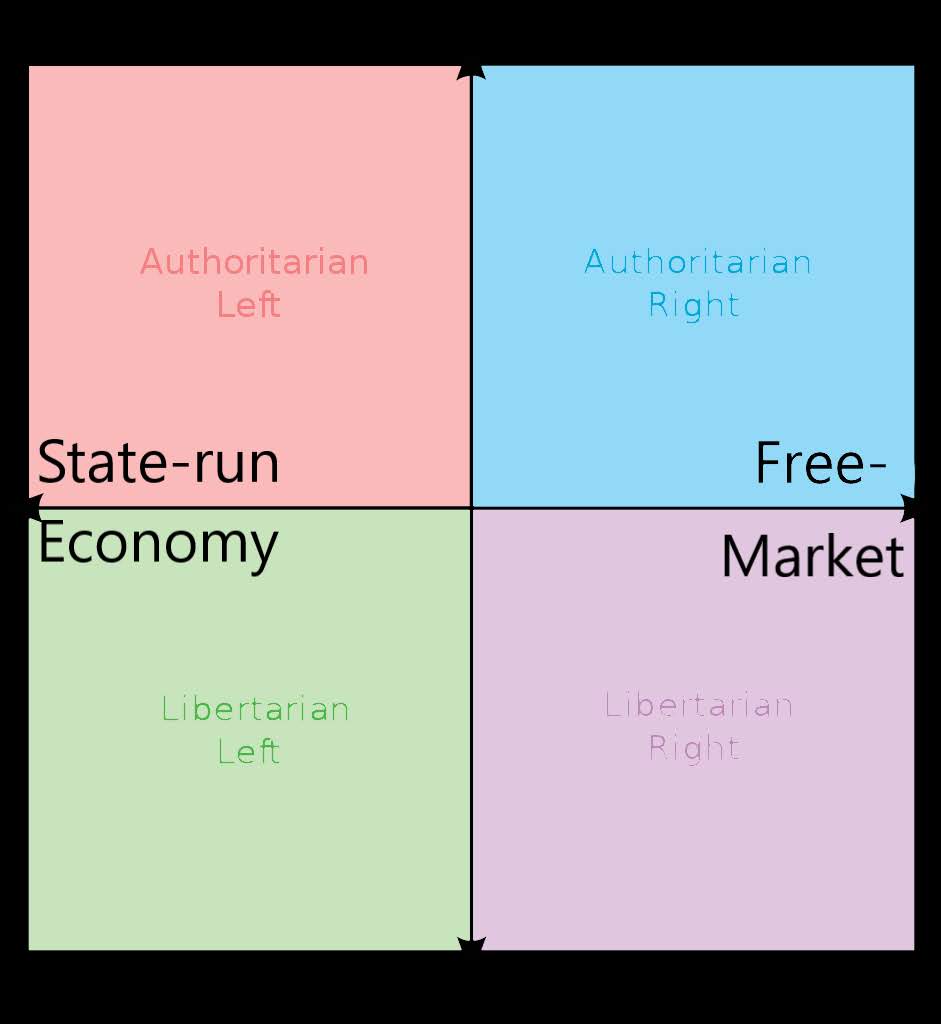
The simple fact is that the loss of faith in state planning by many on the left has led many away from the traditional left. This creates problems when viewing through the familiar political compass.

Traditional political compass

 
According to the traditional compass, above, left-wingers are split into libertarian (anarchists) and authoritarian (socialists). But what does it mean to be left-wing?

One answer is that left-wingers want government control of the economy so that it is run for the benefit of the people or the workers. On this view the political spectrum runs from free-market to government-control.


 The problem with this is that it leaves no room for left-wingers who don’t believe that state-run industry is a good idea, or that it is simply wrong as the state should not exist.

Another answer is that left-wingers want governments to redistribute resources from the economically successful to the less successful. This is less radical in one respect—it doesn’t require the overthrow of capitalism and this isn’t its aim. It requires tough regulation of firms to ensure that they act in the public interest, including price regulation if there are natural monopolies. More distinctly, it requires large-scale redistribution from the more economically successful to the less.


 But if left and right are understood in the ‘old’ way then on this compass there is no place for the distinction between those who would want state control of all industry, those who seek the abolition of private property and those such as myself who advocate a maximally redistributive form of capitalism. Personally, I argue for extreme interference in people’s post-tax income, but not for state control of industries or the removal of all state apparatus.

The kind of position I am referring to was called the ‘third-way’ in the 90s, but is more correctly termed liberal egalitarianism. Liberal egalitarians support whatever economic system works best for the worst-off and want to ensure that everyone has political and personal freedoms. 

The 'third way' was castigated after the failure of the Clinton and Blair governments to that much redistribution. As a side, note, I think they did more than credited, it was nowhere near what many supporters of a ‘third-way’ would want. Critics would point out that this is inevitable since the position acquiesces in a pro-market ideology, while defenders would point out these movements were either unambitious or hamstrung by the political climate.

When compasses fail


Something is wrong with a spectrum or compass if two very different political positions come out as being the same. Or if someone would label themselves in one position but others would place them somewhere completely different.

Both of the above compasses (compii?) fail to reflect the variety of left-wing thought. The simple fact is that the left splits into represent different dimensions – statist/central-planning, reformist/redistributive, and anarchist/utopian.

Does authoritarian-libertarian axis do the job?


Most people will be thinking that I’m missing the importance of the other axis, which adequately allows us to take account of the old-new division. We could ascribe authoritarian as state-control and libertarian as less state control over the economy. This is plausible, and it is probably how many people see that axis. But I don’t think this solves the problem.

After all, this means that the bottom left section contains radically different political views in the same positions. Traditional left-wing anarchist/libertarian thought would appear here as they are against state interference. However, so would supporters of redistributive capitalism, even though these are totally different systems.

The other (authoritarianism) axis is also of course multiply-ambiguous too.

It refers to the level of state interference in people’s lives, but it isn’t necessarily the case that more interference in one realm implies greater interference in another (though libertarians would no doubt claim this). This axis could instead be considered the distinction between social conservativism and libertarianism.

There could be a theocratic state which was very intrusive regarding people’s personal relations, but quite laissez-faire when it came to economic interventions. On the other hand there could be a state which was very libertarian about people’s lifestyle choices but very interventionist as far as private property ownership was concerned.

So, we could ignore the social-conservative dimension and focus on economic interference alone. But then the highly redistributive liberal comes out.

Solutions?


So, should we come up with a hologrammatic cube?

Or an even-more multi-dimensional representation of political space (using sounds or something)?

I don’t know.

But I do know that the left is, as ever, split between various factions with incompatible views while the (perhaps less numerous) right is broadly in agreement on the issue of (relatively or selectively) free markets.

What I don’t appreciate is when people mis-represent the left-wing redistributive liberals such as myself as having a view with which we vehemently disagree. Left-wingers who agree with us on the badness of free-market capitalism label us as ‘neoliberal’ supporters of free-market capitalism.  Right-wingers who agree with us about the badness of state-run economies or the abolition of private property label us as socialists or communists. But we support private property and freedom of enterprise.

Perhaps the only solution is to acknowledge that redistributive capitalism is a valid position and engage with it properly rather than in name-calling. People don’t just hold this position solely as a result of cynical electoral calculation and triangulation (though that be the case for some politicians). Liberal egalitarianism is an attractive political philosophy and can plausibly be considered to offer the best life prospects for working people.


Thursday, 12 November 2015

Interpreting and applying Dworkin’s hypothetical insurance

I have realised that I have not blogged about an article of mine published in the journal Moral Philosophy and Politics entitled The Holistic and Policy-Focused Interpretation of Hypothetical Insurance.

In the paper I consider the best way to understand and make use of Ronald Dworkin’s hypothetical insurance scheme. This is a procedure to determine fair policies to help the less well-off by asking people what they would agree to pay and receive if they did not know whether they were fortunate or not. So to work out how much people who suffer from an illness should get you ask what insurance people would buy themselves if they didn’t know whether they have it or not. If sufferers get less they are not being treated fairly. Conversely, if non-sufferers provide more to sufferers than they would have agreed to receive in the hypothetically equal position then they are not being fairly treated.

This lends itself to an interpretation of the approach that each of these decisions involves a separate decision about a transfer of resources from the fortunate in that regard to the less fortunate in that regard. Add up all of these transfers and you work out how each person should be paying or receiving all told.

The way Dworkin presented the approach lends itself to this interpretation, but he does make clear at times that he isn’t just talking about resource transfers—providing blind people with guide dogs and paraplegics with wheelchairs and carers might be a more sensible insurance choice than giving money.

I believe the best interpretation of Dworkin is a holistic one that allows the parties to hypothetical insurance not in terms of simple payments from fortunate to unfortunate but as a selection between the policies that are available to tax the fortunate and assist the less fortunate from a position of hypothetical equality.

This interpretation contrasts with the idea that each insurance choice is hypothecated from the others so money from inheritance taxation would have to spent to alleviate social inequality rather than go into a big pot to assist the less fortunate. It also contrasts with the insurance-focused understanding of Dworkin that implies that transfers are necessarily the main tool for sorting out inequalities (basically all sensible policy options are open to people to choose in their hypothetical insurance deliberations).

I believe my holistic interpretation better fits with the ideal of resource egalitarianism that people should have as much choice as possible from an equal starting point. It does so by allowing people a choice over the policies that will be used to achieve their insurance preferences.

My suggestion is that Dworkin’s insurance model can be readily applied to tax and benefit policies; though admittedly in some cases it will generate much more determinate and definitive answers than others. On some issues you might need to find out a lot about people’s attitude to risk, their values and the likely effects of various policies in order to work out the fair distribution. However, in my PhD thesis I argued that if you apply this reasoning to the taxation and benefit options then my CLIPH-rate tax proposal would be the popular choice for people choosing from an equal position.

Sunday, 28 June 2015

Minimum wage and its cost to workers

I have argued in a previous blog that my hourly subsidy proposals should be much more effective at supporting the least economically fortunate than a generous minimum wage.

There are several reasons to prefer targeted earnings subsidies to the minimum wage as a means to increase the living standards of low earners, such as that high minimum wages will price some people out of the job market, make some products and services untenable, benefit low-wage workers from already wealthy families and that it will damage exports from the area and shift the economy to more service work instead.

I wanted to emphasise another important reason that minimum wages can take from the poor while giving to them. According to economic theory (though backed up by a lot of evidence), minimum wage increases will generally be passed on to consumers.

The important question is who will pay the cost of these price increases. If only the goods and services purchased by the economically fortunate increase in price then it is a highly redistributive policy.

On the other hand, if low earners will have to pay a lot more for the goods they buy then the policy simply takes with one hand while giving with another. This is particularly problematic where the minimum wage is having a lot of other impacts on the economy such as increasing involuntary unemployment for the worst off.

The literature on the subject seems to indicate that the latter is true, and that the minimum wage will increase prices substantially for the low workers. Examples are from the USA MaCurdy, 2015 as summarised in the WSJ; Hungary Harasztosi and Lindner, 2015; and the UK Wadsworth, 2010 (also cited in Aitken Dolton and Wadsworth, 2014).


Are there reasons to be sceptical of this argument that earning subsidies might be more effective than the minimum wage at improving the position of the least well off? Perhaps some will worry that the evidence comes from right-wing or mainstream economists. But is there any evidence to the contrary? I would be interested if anyone has any contrary evidence that they can share.